


History of Monolithic Domes
Ancient Engineering Principles Applied To Modern Ultra-High-Performance Construction™
Most conventional buildings are assembled from many separate materials, layers, seams, and mechanical systems.
Over time, those systems expand, contract, leak energy, trap moisture, deteriorate, and require increasing maintenance.
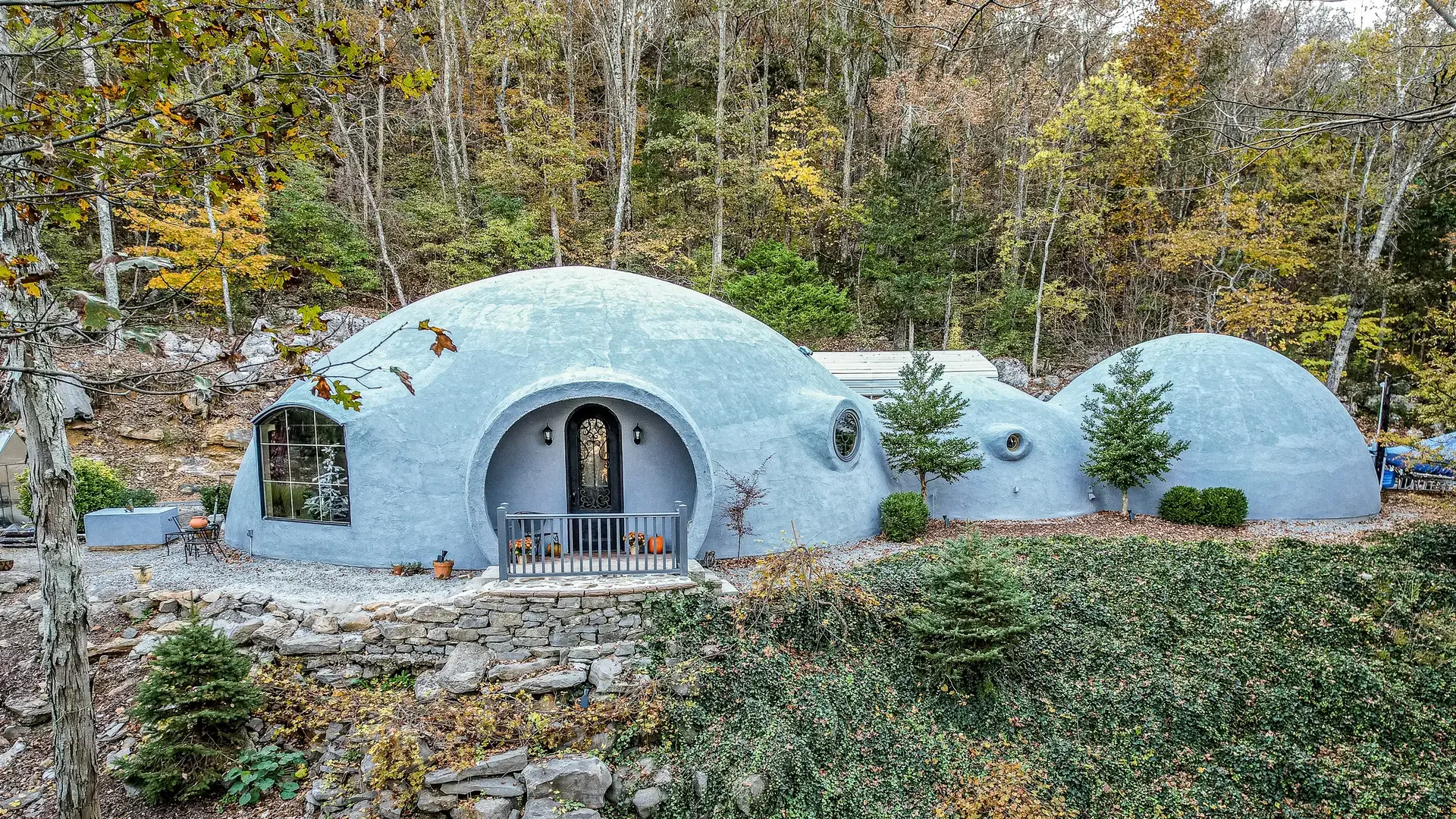
The Monolithic Dome system was developed as a different approach by creating one continuous structure using reinforced concrete, steel reinforcement, insulation, and curved geometry.
The Roman Pantheon
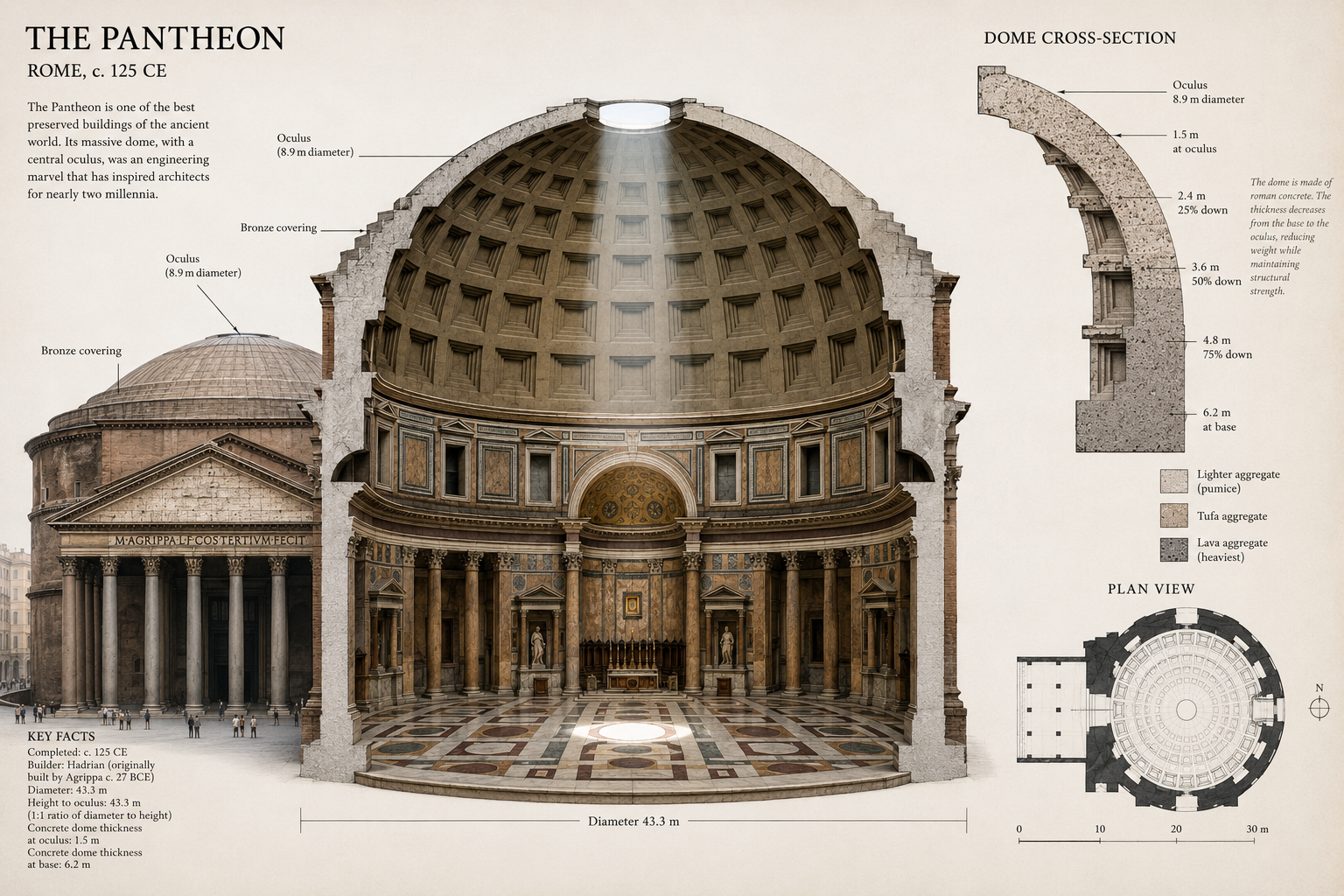
One of the greatest examples of this engineering logic is the Pantheon Dome in Rome.
Built around 126 AD, the Pantheon still stands nearly 2,000 years later because its curved concrete dome distributes force evenly through compression.
The Pantheon demonstrated that long-term structural strength comes not only from material strength, but also from curved geometry.
The Birth of the Modern Monolithic Dome
In the 1970s, David South, Barry South, and Randy South searched for a stronger and more energy-efficient way to build durable structures.
By combining an inflated airform, foam insulation, steel reinforced concrete into one continuous shell, they developed the first modern Monolithic Dome system.
In 1976, they built the first modern Monolithic Dome.
The Orion Evolution
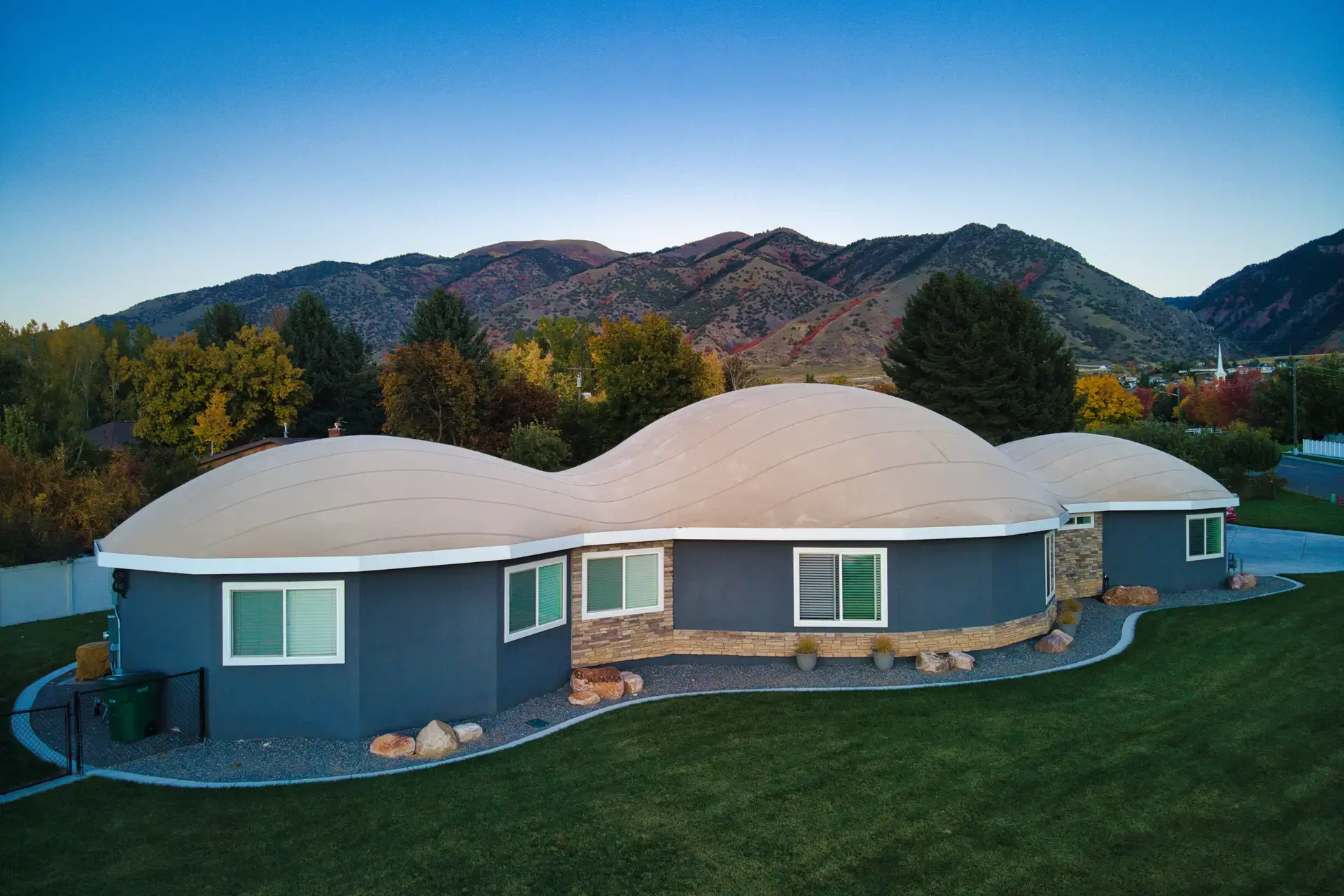
Although traditional domes performed extremely well structurally, many people found full dome shapes visually unfamiliar.
Builders discovered that many people responded better to structures with straight lower walls combined with curved roof geometry.
This later became known as the Orion configuration.
Why Dome Shape & Reinforced Concrete Matter
Ultra-High-Performance Construction™ combines durable materials with strong curved geometry to create energy-efficient, lower-maintenance structures designed for long-term durability.
Curved geometry distributes force more efficiently, allowing structures to become stronger while using less material.
Ultra-High-Performance Construction™ applies these engineering principles to modular shelters, cabins, office structures, and long-term rental community development.